Payment Pathway Analysis Reveals Strategic Adaptations in Mobile Blackjack and Roulette Applications
Written by Jakob Franke · Jul 20, 2026

Payment Pathway Analysis Reveals Strategic Adaptations in Mobile Blackjack and Roulette Applications
Observers note that digital wallet movements often align with distinct tactical adjustments when players engage mobile blackjack and roulette environments, where transaction timing, frequency, and amounts shape bankroll allocation decisions. Research from industry reports shows that rapid e-wallet transfers enable more frequent small-stake sessions, whereas slower bank-linked options correlate with extended play periods and conservative bet sizing. Data indicates these patterns hold across regulated markets, with payment speed directly affecting how participants manage variance in both games. Blackjack strategies tend to incorporate card-counting adjustments when wallet balances refresh quickly, allowing players to capitalize on favorable counts without interruption, while roulette participants adjust wheel-bet distributions based on deposit velocity to maintain session length targets.Transaction Velocity and Bankroll Segmentation
Studies found that high-velocity wallet flows prompt users to segment funds into separate virtual envelopes for different game types, a practice documented in multiple platform analytics reviews. Faster incoming transfers support aggressive doubling strategies in blackjack, where participants increase wagers after wins because replenishment feels immediate, whereas delayed withdrawals encourage holding patterns that favor even-money roulette bets over high-risk inside numbers.
According to transaction logs examined in academic analyses, players who route funds through instant digital wallets display shorter average decision times between hands and spins, leading to higher total action volume per session. Those relying on traditional card or transfer methods exhibit longer pauses, which align with more deliberate strategy recalibrations such as switching from Martingale progressions to flat betting in roulette.
Bonus Integration and Flow Timing
Figures reveal that bonus funds tied to specific wallet types influence strategy selection, particularly when wagering requirements tie directly to deposit speed. Mobile blackjack users often deploy bonus balances on low-volatility side bets when wallet credits arrive in staggered batches, preserving main balance for primary hands, while roulette participants time bonus activation to coincide with wheel bias tracking sessions that require sustained play.
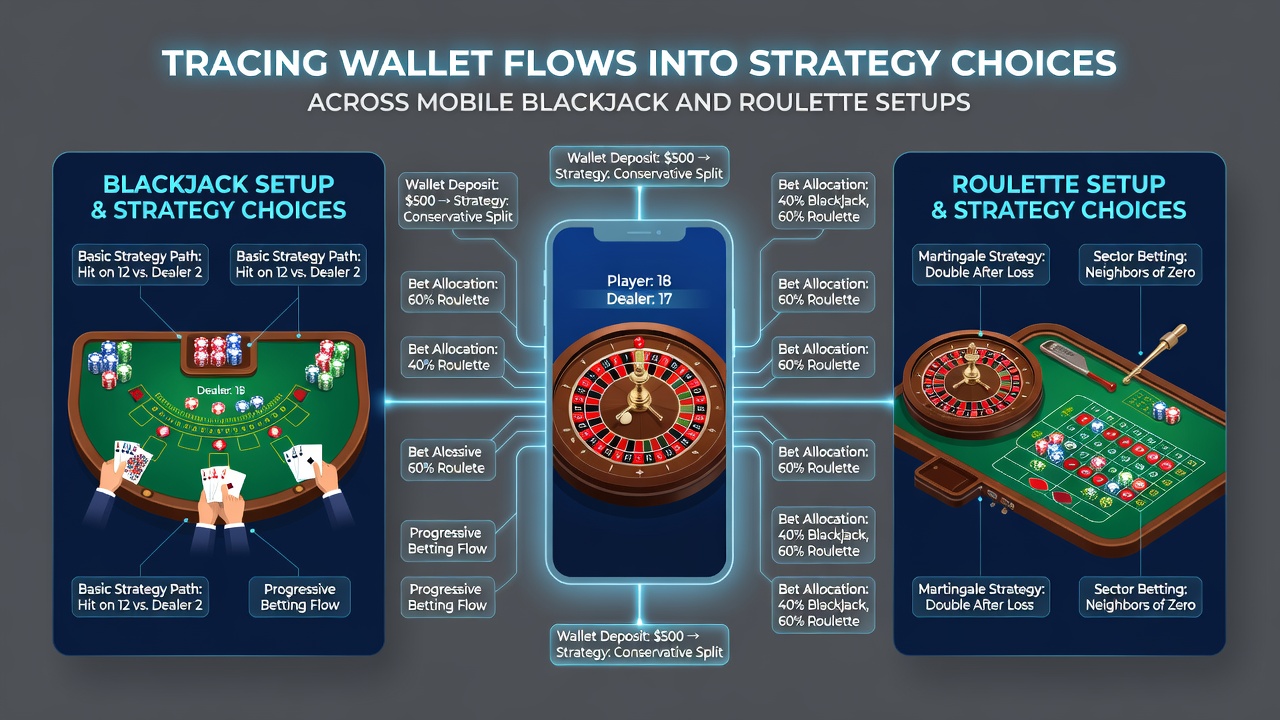
Evidence suggests that cross-game fund movement from slots winnings into live dealer tables creates distinct patterns, where accumulated credits from quick wallet clearances translate into larger initial bets on blackjack insurance options during dealer ace-up situations. Roulette players, by contrast, often redirect those same flows toward outside bets when wallet history shows consistent deposit-withdrawal cycles, reducing exposure during perceived variance spikes.
Regional Regulatory Influences on Flow Visibility
Reports from the Nevada Gaming Control Board highlight how transparency requirements around digital wallet usage affect visible strategy shifts, with players adapting bet patterns once transaction histories become auditable. Similar observations appear in analyses from the Australian Communications and Media Authority, where data on mobile payment integration shows increased use of progressive betting systems once wallet reconciliation features reduce reconciliation delays.
University-led examinations of transaction datasets further demonstrate that players monitoring real-time wallet balances adjust stop-loss thresholds more frequently in blackjack than in roulette, because card outcomes provide clearer feedback loops for recalibration. Roulette sessions, however, extend when wallet interfaces display pending withdrawals, prompting participants to maintain minimum bets across multiple wheel spins while awaiting confirmation.
Device-Level Flow Tracking and Tactical Feedback
Platform telemetry collected through July 2026 indicates growing integration between wallet APIs and in-game analytics overlays, allowing users to view cumulative spend against strategy performance metrics. Blackjack participants respond to these overlays by tightening basic strategy deviations when wallet outflows exceed projected rates, whereas roulette players widen coverage on column bets to offset tracked session costs.
Those monitoring cumulative wallet activity often shift from single-deck to multi-deck blackjack variants when rapid outflows signal higher risk exposure, a pattern confirmed across multiple operator datasets. Roulette adjustments include moving from European to American wheel selections when wallet inflow intervals suggest the need for higher house-edge tolerance during longer sessions.
Conclusion
Patterns emerging from wallet flow data continue to demonstrate measurable impacts on tactical choices across mobile blackjack and roulette environments. Transaction characteristics shape bet sizing, game variant selection, and session duration decisions in ways that align with documented behavioral analytics. As payment infrastructure evolves, these relationships between fund movement and strategic execution remain central to understanding player activity within regulated mobile gaming frameworks.