Adapting Traditional Card Games for Mobile Devices Faces Challenges from Licensing Requirements
Written by Jakob Franke · Jun 20, 2026
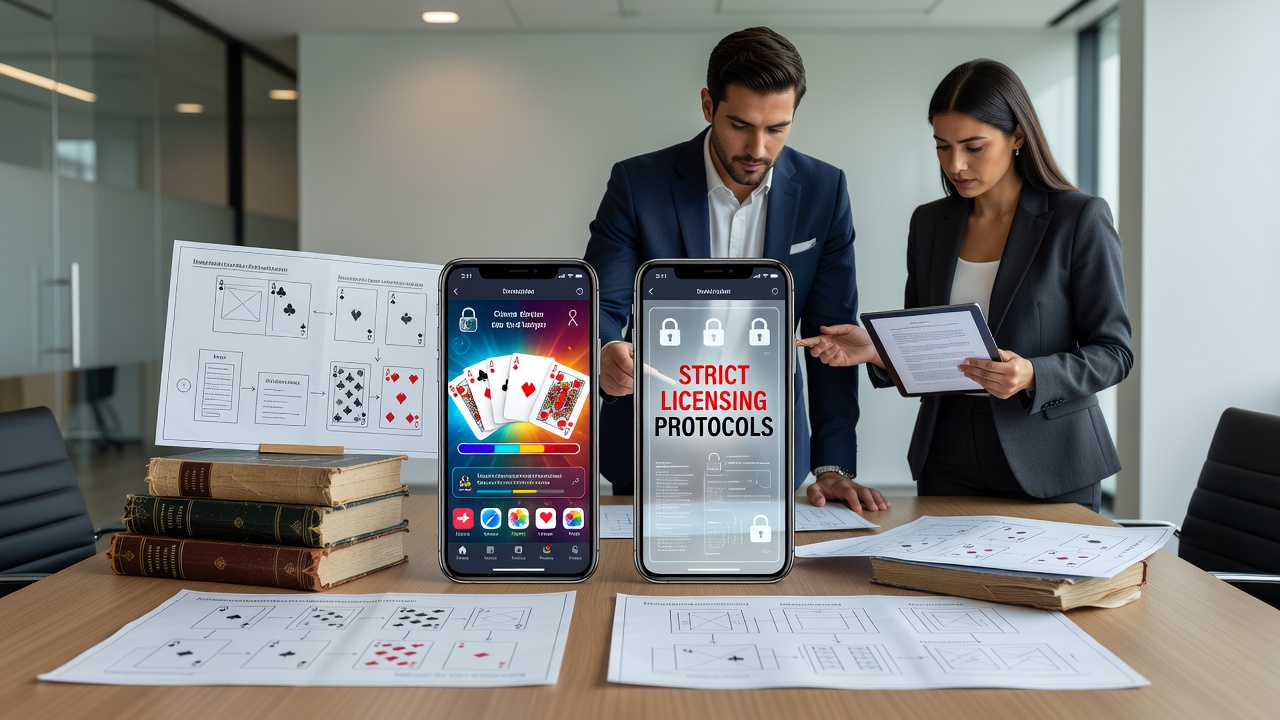
Adapting Traditional Card Games for Mobile Devices Faces Challenges from Licensing Requirements
Developers continue to refine how classic card games transition onto smartphone platforms while meeting demanding licensing standards that vary by jurisdiction and evolve over time. These adaptations often involve adjustments to visual layouts, interaction mechanics, and verification processes that ensure compliance with regulatory frameworks established by bodies such as the Nevada Gaming Control Board and the New Jersey Division of Gaming Enforcement.
Screen dimensions impose immediate constraints on how players view multiple cards and place bets simultaneously, which prompts designers to reorganize elements into layered menus and gesture-based commands. Researchers at institutions including the University of Nevada, Reno have documented how touch interfaces alter decision timing compared with physical tables, leading some protocols to modify certain rule variants for digital fairness.
Core Adjustments in Game Mechanics
Blackjack implementations frequently consolidate split and double-down options into swipe gestures or expandable panels because limited real estate prevents simultaneous display of all choices, yet licensing audits require these modifications to preserve mathematical probabilities identical to land-based versions. Poker variants encounter similar pressures when community cards and hole cards must remain visible without crowding the display, prompting software teams to introduce collapsible views that regulators review for transparency.
Data from industry reports compiled by the American Gaming Association indicate that certification processes now incorporate mobile-specific testing sequences focused on gesture accuracy and session continuity across network interruptions. These sequences verify that rule adaptations do not inadvertently shift house edges or create exploitable patterns during extended play sessions.
Regulatory Oversight Across Regions
Licensing protocols in multiple territories demand that mobile adaptations undergo independent testing by accredited laboratories before public release, a step that examines both random number generators and user interface consistency. Observers note that European regulators have introduced additional requirements for data encryption and player authentication that intersect with mobile operating system updates released in June 2026, creating tighter synchronization between software versions and compliance documentation.
One study released by the Canadian Gaming Association examined how regional differences in licensing timelines affect release schedules, revealing that jurisdictions with streamlined review processes enable faster deployment of interface refinements while maintaining equivalent player protection standards. Those findings underscore the balance developers maintain between innovation speed and procedural rigor.

Stakeholder consultations involving software engineers, compliance officers, and player representatives have produced guidelines that address accessibility concerns alongside regulatory mandates. These discussions often highlight the need for scalable fonts, color contrast adjustments, and alternative input methods that do not compromise the integrity of game outcomes.
Technical Integration and Verification
Integration of live dealer streams with mobile card interfaces introduces further layers of complexity because latency compensation mechanisms must align with licensing stipulations that prohibit any alteration of card distribution sequences. Certification reports from laboratories such as those recognized by the Isle of Man Gambling Supervision Commission detail how synchronization protocols undergo repeated validation cycles to confirm that visual representations match backend results exactly.
Companies routinely publish compliance summaries that list tested device models, operating system versions, and specific rule adaptations applied for each platform, allowing regulatory bodies to conduct targeted audits. This documentation practice has become standard following updates to international testing standards that took effect earlier in the decade.
Case examples from major operators illustrate how iterative testing resolves edge cases, such as orientation changes mid-hand or background app interruptions that could affect rule application. Each resolution undergoes review to ensure continued alignment with original game mathematics approved during initial licensing.
Future Developments in Mobile Compliance
Emerging technologies including augmented overlays and cross-device synchronization continue to prompt fresh evaluations of existing licensing criteria. Regulatory agencies in Australia and several Asian markets have begun pilot programs that assess whether these features maintain required transparency levels when deployed at scale.
Industry associations coordinate working groups that share anonymized testing data across borders, which helps standardize evaluation criteria without forcing uniform rule sets. Such collaboration reduces redundant audits while preserving jurisdiction-specific player safeguards.
Conclusion
Adaptation of classic card game rules for smartphone environments remains an ongoing process shaped by hardware limitations, player expectations, and evolving licensing frameworks. Continued dialogue between developers, regulators, and researchers supports refinements that uphold game integrity across diverse mobile ecosystems.